🐍 Snakes
Western Hognose Snake Care Guide
Heterodon nasicus
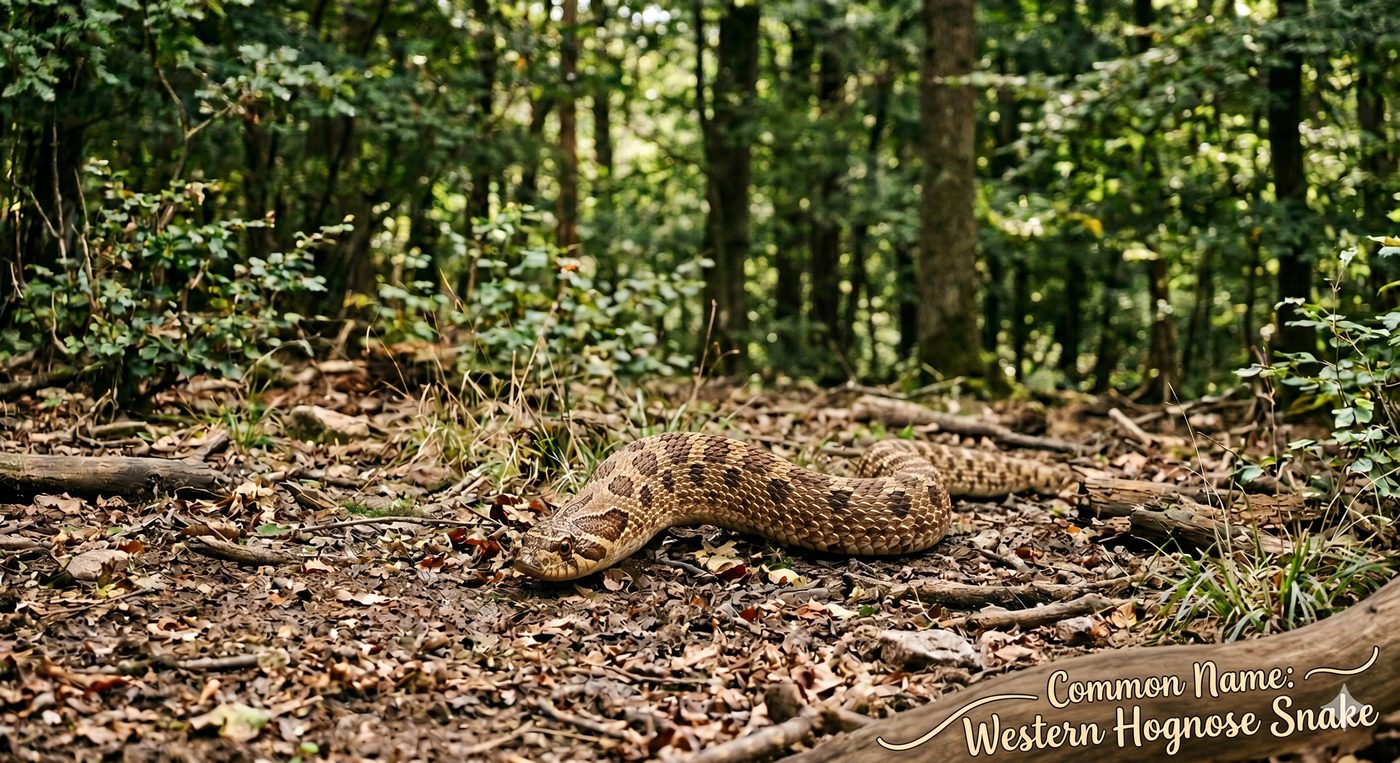
Image: Wikimedia Commons
Experience
Beginner
Lifespan
15–20 years
Adult Size
17–24 in
Origin
into northern Mexico
Heterodon nasicus
Image: Wikimedia Commons
normal; settles with regular handling Venom Mildly venomous, rear-fanged; not medically significant to most people, but bites can cause localized swelling
The Western hognose is a small, stout terrestrial colubrid native to the dry grasslands, prairies, and sandy floodplains of central North America. Its range stretches from southern Canada down through the central United States and into northern Mexico, where it favors loose, well-drained soils it can dig through with its trademark upturned, shovel-like snout. This is an arid-climate animal first and foremost, and almost every husbandry decision flows from that fact: low ambient humidity, a dry burrowing substrate, and a clear warm-to-cool temperature gradient. In the wild these snakes spend much of their time underground or tucked into rodent burrows, using the earth to regulate temperature and moisture, so a captive setup should give them the same opportunity to dig and disappear. Hognoses are also famous for their theatrics. When threatened they flatten their necks into a cobra-like hood, hiss loudly, and may strike with a closed mouth. If the bluff fails, many will roll onto their backs, gape, and go limp in a convincing death feign. None of this is aggression — it's a harmless defensive display, and captive-bred animals typically calm down with consistent, gentle handling.
Hognoses are ground-dwelling burrowers that use floor space far more than height. A single adult does well in an enclosure of at least 36 × 18 × 12 inches (a 40-gallon "breeder" is the standard adult size). nervous young snake feel secure and feed reliably. Always provide a secure, well-ventilated lid, as these snakes are persistent and surprisingly strong escape artists.
Because this is a digging species, deep loose substrate is essential. Provide at least 3 inches of depth, and 4–5 inches for large adult females, so the snake can construct and hold burrows. Good options include aspen shavings, a 70/30 mix of organic topsoil and play sand, or commercial soil-style "dig" substrates. Avoid substrates that stay damp, as constant moisture against the belly leads to scale rot.
Offer at least two snug hides — one on the warm side and one on the cool side — so the snake never has to choose between feeling secure and being at the right temperature. A third humid hide (a hide with damp sphagnum moss) is valuable around shed time. Hognoses appreciate clutter: cork bark, sturdy plants, and surface décor give them cover and enrichment while they explore above ground.
Maintain a clear thermal gradient measured at the substrate surface: Warm side: 88–90°F (31–32°C) Basking spot: around 90°F (32°C) Cool side: 75–80°F (24–27°C) Night: a mild drop into the low 70s°F is fine Use a thermostat-controlled heat source and verify temperatures with a probe or infrared thermometer rather than guessing. Reliable warmth is critical for digestion, so never let the whole enclosure drift too cool after feeding.
Keep ambient humidity low — 30–50% — to match the snake's arid origins. Sustained high humidity (above ~60%) invites scale rot and respiratory infection. The main exception is shedding: a temporary bump toward 50–60%, easily achieved with a humid hide, helps the snake shed cleanly.
A regular day/night cycle benefits the snake. A photoperiod of roughly 12 hours of light in summer, shortened in autumn and winter, mirrors natural seasonal cues. Low-level Uvb is not strictly required but is increasingly considered beneficial; if used, pair it with a proper basking gradient and appropriate shaded retreats.• Prey & Sizing Feed appropriately sized rodents — a prey item roughly equal to the widest part of the snake's body is the right target. Frozen-thawed mice are strongly preferred over live: they're safer for the snake, carry no parasite or bite risk, and store easily. Thaw thoroughly and warm to body temperature to trigger a confident feeding response.
Hatchlings: a pinky mouse every 5–7 days Juveniles: fuzzy to hopper mice every 7–10 days Adults: an appropriately sized mouse every 7–10 days Hognoses, especially adult females, are prone to obesity, so resist the urge to overfeed. Adjust portion and frequency based on body condition rather than the snake's enthusiasm. Refusal & Fasting Notes Hognoses can be food-motivated to the point of comedy, but they also go off food at times — most commonly males during the breeding season, or any snake in the lead-up to a shed. Short, voluntary fasts are normal and rarely cause for alarm in an otherwise healthy, well-weighted snake. If refusal is prolonged or paired with weight loss, review temperatures and husbandry, and consult a reptile veterinarian.
Provide a clean, sturdy water bowl large enough for the snake to drink from and occasionally soak in. Refresh the water regularly and clean the bowl to prevent bacterial buildup. Because this is a dry-climate species, position the bowl so spills don't constantly dampen the burrowing substrate.
Hognoses are generally good handling snakes once acclimated, and their defensive displays are bluff rather than genuine aggression. Support the body, keep sessions calm and unhurried, and give a new or stressed snake time to settle in before regular handling. Avoid handling for a day or two after feeding and during a shed cycle. Because they are rear-fanged and mildly venomous, take their feeding response seriously: wash your hands before handling so you don't smell like prey, and never handle right after offering food. Bites are uncommon and usually harmless, but a chewing bite can cause localized swelling — if you experience an unusual or worsening reaction, seek medical attention.• Signs A snake entering shed often turns dull, with skin taking on a grayish cast and eyes clouding to a bluish, milky color before clearing again a few days ahead of the shed itself. Many snakes hide more and eat less during this window. During the Process Raise humidity modestly with a humid hide so the skin loosens properly. A healthy hognose should shed in a single, complete piece, including the eye caps. Post-Shed Care Check that the shed came off completely — pay particular attention to the tail tip and eye caps. Stuck shed is almost always a sign humidity ran too low; a brief enclosure misting or a longer session in a humid hide usually resolves it. Persistent stuck shed warrants a husbandry review.
The most common problems in captive hognoses trace back to husbandry. Scale rot and respiratory infections follow from substrate that's too wet or humidity that's too high. Stuck sheds point to humidity that's too low. Obesity, especially in adult females, results from overfeeding. External mites can appear, particularly in newly acquired animals, and are treatable. Any signs of open-mouth breathing, wheezing, prolonged refusal to eat with weight loss, or discolored belly scales should prompt a visit to a qualified reptile veterinarian.
Western hognoses are seasonal breeders, and a controlled winter cooling period (brumation) is the standard trigger for reproduction. Working only with healthy, well-conditioned, captive-bred adults, keepers typically stop feeding for about two weeks to clear the gut, then gradually lower temperatures over the following week into a cooler resting range for roughly three months through the winter before slowly warming the animals back up and resuming feeding. Brumation is a meaningful physiological stress and should only be attempted with snakes at appropriate weight and condition; when in doubt, consult an experienced breeder or reptile veterinarian before cooling an animal. This guide was compiled using commonly accepted husbandry practices from experienced keepers and industry-standard reptile care resources.
Print-friendly version of this guide — formatted for keepers on the go.
Download PDF