🐍 Snakes
Kenyan Sand Boa Care Guide
Gongylophis colubrinus
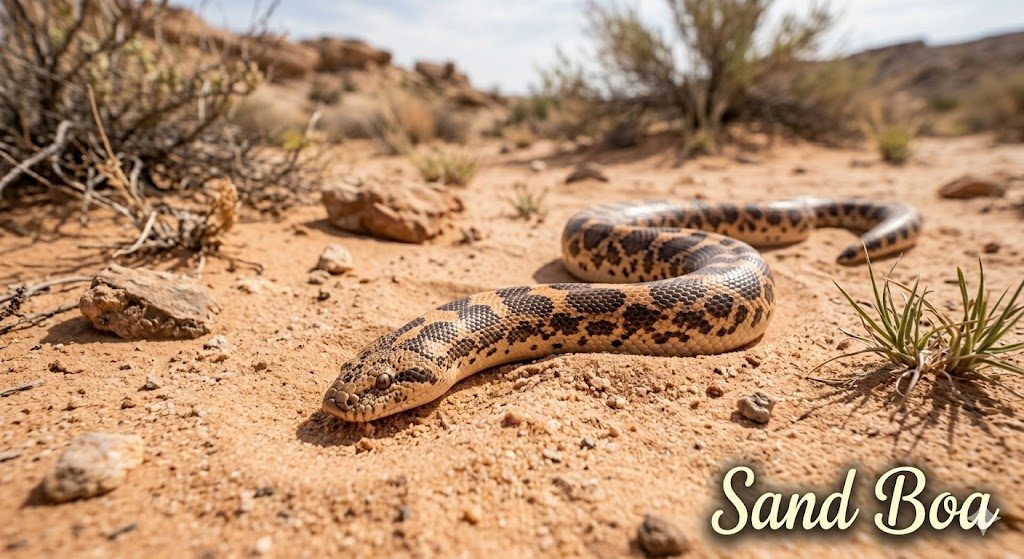
Image: Wikimedia Commons
Experience
Beginner
Lifespan
Species-dependent
Adult Size
24–36 in
Origin
Tanzania)
Gongylophis colubrinus
Image: Wikimedia Commons
Origin Arid northeastern Africa (Kenya, Egypt, Ethiopia, Sudan, Somalia, Tanzania) Adult size Females 24–36 in; males rarely over 20 in Lifespan 20+ years in captivity, sometimes 30+ Experience level Beginner
The Kenyan sand boa is a small, heavy-bodied fossorial snake native to the dry margins of northeastern Africa, where it occupies scrublands, semi-deserts, vegetated sand dunes, and sandy plains from sea level up to roughly 1,500 meters. It has been recorded across Kenya, Egypt, Ethiopia, Sudan, Somalia, Libya, and Tanzania, with regional populations long recognized as distinct forms. Nearly everything about this species is shaped by life underground. It spends most of its time buried in loose sandy soil, frequently with only its eyes and nostrils exposed, lying in wait as an ambush predator. When a small rodent, lizard, or bird wanders within reach, the boa strikes from beneath the surface and constricts. Its upturned snout, small recessed eyes, and muscular body are all adaptations for burrowing and sit-and-wait hunting in a harsh, fluctuating desert environment. Understanding this lifestyle is the key to keeping them well: a Kenyan sand boa that can burrow into deep, dry substrate and ambush its food is a secure, low-stress animal. These same traits make it hardy, long-lived, and one of the most approachable snakes for a first-time keeper.
Kenyan sand boas are ground-dwelling burrowers, so floor space matters far more than height. A single adult should have a minimum footprint of about 30 in long × 12 in deep × 12 in high, though larger is always welcome. Because they are escape artists that push against lids and seams, a secure, well-fitted top is essential. Hatchlings and juveniles can be started in smaller enclosures, which help them feel secure and make feeding easier.Substrate Provide a deep, loose, dry substrate the snake can fully disappear into — this is the single most important element of the setup. Aim for at least 2–3 inches for juveniles and up to about 6 inches for adults so the animal can bury its whole body. Aspen bedding, play sand, and coconut-based substrates all work well. Avoid cedar and pine shavings, which are toxic, and avoid gravel, which is difficult to burrow in and risky if swallowed.
Although a deep substrate provides most of the security these snakes need, a hide on both the warm and cool sides gives them options and helps them thermoregulate. Keep décor minimal and stable so that nothing can collapse into a burrow. A flat rock or piece of cork bark on the surface is plenty.
Offer a clear thermal gradient. The warm end should reach a basking surface of about 90–95°F, with the cool end held around 75–80°F. A night-time drop into the mid-70s is fine and natural. Always measure surface temperatures at the basking spot with a thermostat-controlled heat source to prevent burns, since these snakes spend their time pressed against the substrate.
Feed juveniles about once a week. Adults need far less: every 10–14 days is typical, and non-breeding adults can comfortably go up to about every 14–21 days. These snakes are prone to obesity when overfed, so err toward the longer interval for settled adults and watch body condition rather than feeding on a rigid schedule.Refusal & Fasting Notes Occasional refusals are normal, especially during shedding, seasonal cooling, or after a recent meal. A snake that is shedding may strike and constrict prey only to abandon it. As long as body condition is good, short fasts are not a cause for concern. Persistent refusal paired with weight loss warrants a closer look at temperatures and husbandry.
Provide a small, sturdy water dish with fresh water at all times. Keep it modest in size and positioned on the cooler side; a large or frequently spilled dish raises enclosure humidity beyond what this arid species tolerates. Refresh the water regularly and clean the dish as needed.
Kenyan sand boas are generally docile and tolerate gentle handling well, making them a good choice for newer keepers. That said, they are strongly food-motivated and may strike when they expect a meal, so move deliberately and avoid handling around feeding time. Give new or young animals a couple of weeks to settle in before handling, keep sessions short and low to a surface, and support the body fully. As with any snake, handling carries some risk and is done at the keeper's discretion.
Signs Before a shed, the skin dulls, the belly may take on a pinkish cast, and the eyes turn cloudy or blue. The snake may become more reclusive and refuse food during this period. During the Process Living buried in substrate helps these snakes shed by providing natural abrasion. A short bump in
as vision is reduced and the animal is more defensive. Post-Shed Care After the shed, check that it came off completely, paying special attention to the tail tip and the eye caps. Retained shed usually points to humidity that was too low during the cycle and can be corrected with a brief humidity increase next time.Health & Common Issues The most common problems in captivity are husbandry-related and largely preventable. Respiratory infections and scale rot stem from substrate or air that is kept too humid — the fix is a dry, well- ventilated enclosure. Retained shed traces back to insufficient humidity during the shed cycle. Obesity is a frequent issue in this easy-feeding species and is avoided by spacing meals appropriately and monitoring body condition. Mites can be introduced with new animals, so quarantine new arrivals. Any wheezing, open-mouth breathing, persistent refusal with weight loss, or discolored patches on the belly should be evaluated by an experienced reptile veterinarian.
Kenyan sand boas are ovoviviparous, giving live birth rather than laying eggs, and are among the more accessible boas to breed. Females should be mature and well-conditioned — generally at least two years old, around 21 inches or more, and a healthy weight before being considered for breeding. Many keepers use a winter cooling (brumation) period as a reproductive cue: feeding is stopped roughly two weeks before cooling, enclosure temperatures are lowered into the 65–75°F range for several weeks (typically starting in winter), and fresh water is kept available throughout. Normal temperatures and
Print-friendly version of this guide — formatted for keepers on the go.
Download PDF