🕷️ Tarantulas
Indian Ornamental Tarantula Care Guide
Poecilotheria regalis — Pocock, 1899
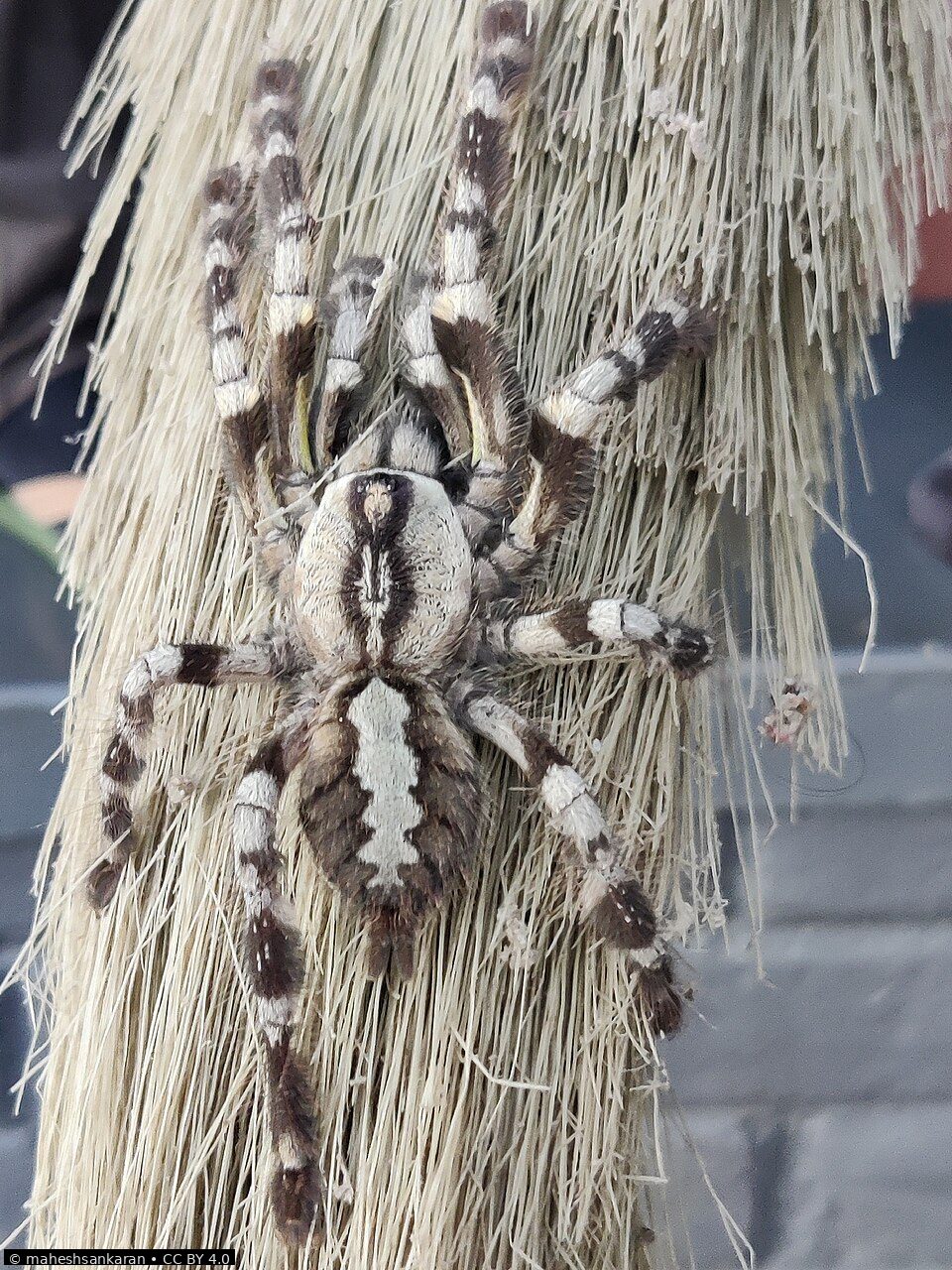
Image: Wikimedia Commons
Experience
Advanced
Lifespan
Up to 12 years (females)
Adult Legspan
6–7 in DLS
Origin
India
Poecilotheria regalis — Pocock, 1899
Image: Wikimedia Commons
Poecilotheria regalis — the Indian Ornamental — is an arboreal Old World species native to the forests of central and southern India. It lives in tree hollows and under bark, where its intricate patterning provides near-perfect camouflage against weathered wood.
As a member of genus Poecilotheria, it needs an arboreal setup — height, secure bark retreats, and humidity balanced with ventilation. But like all "pokies," its defining requirement is keeper experience: this is a fast, defensive species with no urticating hairs and medically significant venom.
Adults wear an ornate mosaic of grey, cream, and black across the body, with vivid yellow-and-black banding on the undersides of the legs that flashes in a threat display. Often described as one of the calmer Poecilotheria, it is still blindingly quick and absolutely not a beginner's spider.
This is an arboreal species, so height matters more than floor space. Use a tall enclosure with cross-ventilation (vents on opposite sides or front and top) and tall anchor points for webbing. A front- or side-opening enclosure is ideal, as reaching down from above startles the spider and tears its web.
| Life Stage | Enclosure | Notes |
|---|---|---|
| Spiderling (under 1") | Tall vented vial / small arboreal cup | Vertical cork, anchor points, light moisture, heavy ventilation |
| Juvenile (1–3") | Tall acrylic or 2–4 gal vertical | Cork tube, fake foliage, cross-ventilation |
| Sub-adult / Adult (3"+) | 12×12×18 in (or taller) vertical | Vertical cork bark, plants, water dish, strong cross-ventilation |
Provide a vertical cork bark slab or tube against one wall, plus fake plants, so the spider can build its tube-web off the ground. A shallow layer of substrate (2–3 in) holds light moisture and cushions any fall, but this species lives up top, not in the dirt.
Warm, humid, and well-ventilated mirrors the island canopy. Achieving humidity without stagnant air is the whole game with this species.
| Parameter | Target | Notes |
|---|---|---|
| Temperature | 75–85°F (24–29°C) | Stable warmth; avoid sustained drops below 70°F |
| Ambient Humidity | 70–80% RH | High — always paired with good cross-ventilation |
| Moisture | Light misting | Mist part of the bark/wall every few days; keep substrate slightly moist |
| Water | Water dish | Provide a dish; the spider also drinks misted droplets |
The Indian Ornamental is a fast, confident feeder that ambushes prey from its bark retreat. It rarely refuses a meal outside of pre-moult.
Prey: Gut-loaded crickets, Dubia roaches, and other feeder insects. Keep prey no larger than the spider's abdomen.
Frequency: Spiderlings twice a week, juveniles every 5–7 days, adults every 7–10 days. Keep moisture and water consistent, as arboreals are more prone to dehydration than terrestrials.
Remove uneaten prey within 24 hours — and only open the enclosure once the spider is located and a catch cup is ready.
The Indian Ornamental typically moults inside its bark retreat. Each moult sharpens the intricate grey-and-cream patterning and the yellow leg banding. Growth is moderate, slowing to once or twice a year in adults.
Pre-moult signs: A darkened abdomen, food refusal, and increased time sealed in the web. Remove all live prey at the first signs.
Post-moult: Leave the spider completely undisturbed and wait 7–14 days before feeding so the new exoskeleton and fangs harden. Keep humidity steady throughout — fresh moults are vulnerable to drying out.
Handling is strongly discouraged for the Indian Ornamental. As an Old World species it has no urticating hairs — its defences are extreme speed and a bite delivering medically significant venom. Documented Poecilotheria bites can cause severe, prolonged muscle cramping, sweating, and systemic pain lasting days. Even the "calmer" reputation of this species does not make handling safe.
Treat it as an observation-only animal. Use long tools for all maintenance, keep a catch cup ready, rehouse only with experience and a sealed work area, and never open the enclosure without first locating the spider. Seek medical attention promptly for any bite.
Print-friendly version of this guide — formatted for keepers on the go.
Download PDF