🕷️ Tarantulas
Ghost Ornamental Tarantula Care Guide
Ghost Ornamental Tarantula
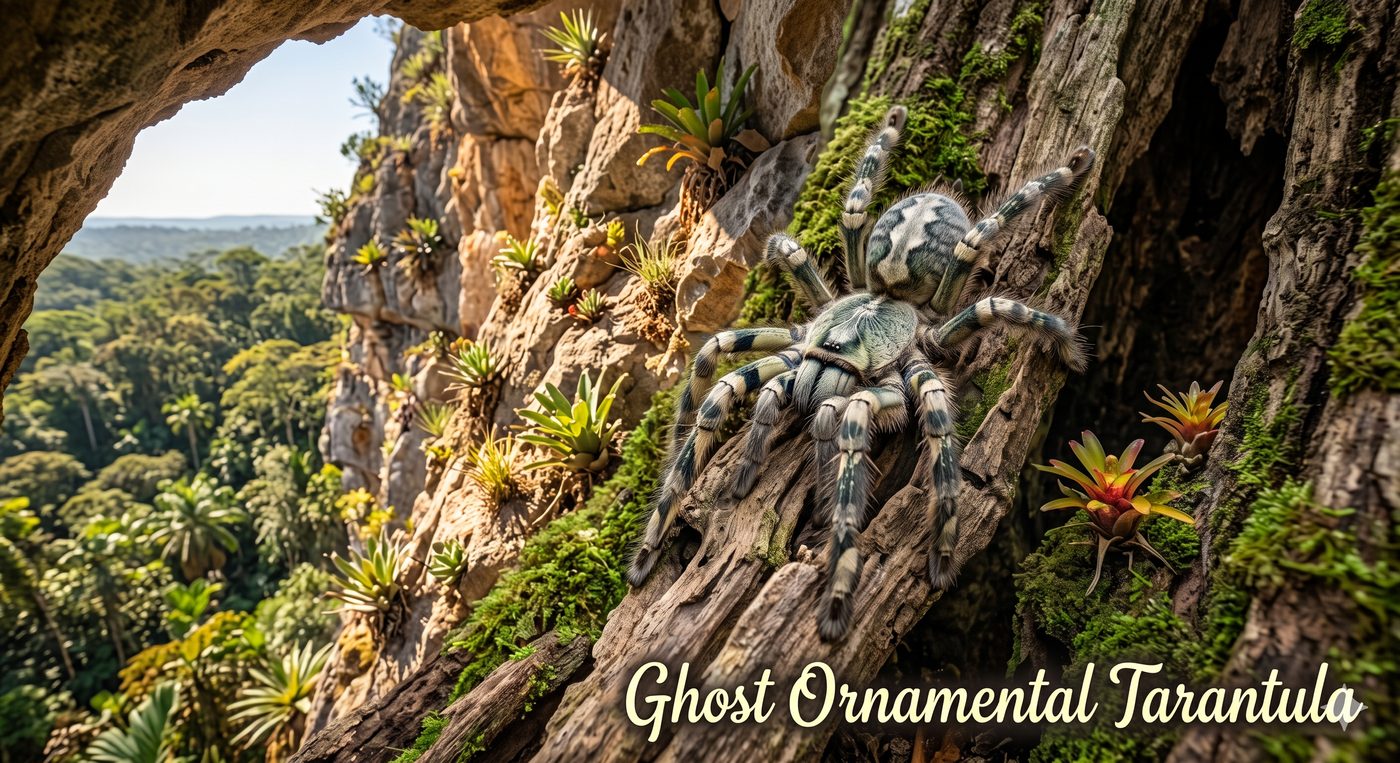
Image: Wikimedia Commons
Experience
Advanced
Lifespan
11–12 yrs
Adult Legspan
6–7 in
Origin
Sri Lanka (endemic)
Ghost Ornamental Tarantula
Image: Wikimedia Commons
Scientific Name Poecilotheria vittata (Pocock, 1895) Also Known As Pederson's Ornamental Magam Tiger Spider Origin Sri Lanka (endemic) Type Old World arboreal Adult Legspan ~6–7 in. (females); males smaller, slimmer Lifespan Females 11–12 yrs males 2–3 yrs Growth Rate Fast Experience Level Advanced
Calm for a pokie; skittish, very fast, photosensitive Venom Medically significant Urticating Hairs None (Old World species)
The Ghost Ornamental is one of Sri Lanka's endemic "tiger spiders," found mainly across the island's south-eastern dry-zone forests with scattered populations in the north. In the wild it shelters inside tree hollows, beneath loose bark, and in rock crevices, anchoring itself with silk and ambushing prey that wanders close to its retreat. It is rarely found near human settlements. The name fits the animal. Where its flashier cousins — the electric-blue P. metallica or the bold P. regalis — advertise themselves, vittata leans into muted greys, browns, and white with a faint purple sheen. That cryptic coloration is camouflage, letting it vanish against bark and lichen. The first and second leg pairs carry matching markings, and the overall effect is a spider that almost disappears the moment it stops moving. This species is listed as Endangered, with habitat fragmentation from forest clearing and illegal wild collection as the main pressures. Captive-bred specimens are widely available in the hobby and are the only responsible way to keep one — supporting ethical breeders directly reduces demand for smuggled wild animals.
Ghost Ornamental (Poecilotheria vittata) This is an arboreal species, so vertical space matters far more than floor space. The enclosure should be taller than it is wide, with secure cross-ventilation to keep air moving. An adult does well in something around 8 x 8 x 12 in. at minimum, with roughly 12 x 12 x 18 in. being a comfortable target. Slings and juveniles should be kept in proportionally smaller containers — a too-large enclosure makes it hard for a young spider to find prey and feel secure. A critical note for any pokie: these animals are lightning fast and will bolt toward an opening the instant it appears. A front-opening enclosure with a deliberate, controlled door is strongly preferred over a top-opening one. Always know where the spider is before you open anything.
Two to three inches of a moisture-retaining substrate (coconut fiber or a coco/peat blend) on the floor helps stabilize humidity, even though the spider will spend most of its life up high. Keep one corner lightly damp rather than soaking the whole enclosure.
Provide a tall slab of cork bark leaned vertically against a wall — this is the anchor point the spider will web around to build its retreat. A few artificial leaves or plants around the bark give it cover and security. Once it establishes a webbed tube, leave it undisturbed.
Comfortable in the range of about 72–84°F (22–29°C). Normal room temperature suits this species in most homes; avoid letting it get cold for extended periods, and never aim a heat source directly at the enclosure.
Aim for moderate humidity, around 65%, paired with strong ventilation. Vittata tolerates drier conditions better than many tropical species, so the goal is to avoid stagnant, soggy air. Lightly mist one side occasionally and let it dry between mistings — a damp corner plus a water dish is enough. Poor airflow combined with constant dampness invites mold, which is a far bigger risk than slightly low humidity.
This is a fast-growing species with a healthy appetite. Slings and juveniles can be fed roughly two to three times a week to fuel growth; adults do well on one to two feedings per week. Adjust based on abdomen size — a plump abdomen means you can space feedings out. Refusal & Fasting Refusing food is normal and usually signals an approaching molt. Remove uneaten prey within 24 hours, especially before a molt, since a loose cricket can injure a soft, freshly molted spider. Ghost Ornamental (Poecilotheria vittata)
Keep a small, shallow water dish in the enclosure at all times and refill it as it empties or evaporates. Reliable access to water is the single best defense against dehydration, particularly for younger spiders.
Not recommended. This is an Old World species with medically significant venom and no urticating hairs to fall back on — its defenses are speed and a serious bite. Even though vittata is considered relatively docile within its genus, it is still extraordinarily fast and will bolt without warning. Routine maintenance should be done with the spider in view and a catch cup on hand, never with bare hands in its space. Any interaction carries real risk and is done entirely at the keeper's discretion.
Signs A darkening abdomen, food refusal, lethargy, and sealing itself into its webbed retreat all point to an upcoming molt. Arboreal tarantulas often molt suspended in their silk. During the Process Do not disturb the spider during a molt. Do not mist heavily, feed, or rearrange the enclosure. Make sure a
The most common husbandry problems are environmental: mold and poor air quality from over-damp, under-ventilated enclosures, and dehydration in slings kept too dry. A consistent water source and good airflow prevent the majority of issues. On venom: bites from Poecilotheria are known to cause severe, prolonged pain and intense muscle cramping that can last for days. The large fangs can also create puncture wounds that may become infected if not cleaned and cared for properly. There is no antivenom for tarantula bites. Anyone bitten — particularly with severe cramping, spreading symptoms, or signs of infection — should seek medical attention. The right mindset for this species isn't fear, but consistent respect and attention every single time the enclosure is open. Ghost Ornamental (Poecilotheria vittata)
Vittata has a reputation as one of the more cooperative Poecilotheria to breed, which is part of why captive-bred specimens are readily available. Males mature around 1.5–2 years; females around 2–3 years. A well-fed female reduces the risk of the male being eaten, and pairings are typically introduced in the evening when the animals are naturally more active. All breeding in the hobby should work exclusively from captive-bred stock — never wild-collected animals. Sources This guide was compiled using commonly accepted husbandry practices from experienced keepers and industry-standard tarantula care resources.
Print-friendly version of this guide — formatted for keepers on the go.
Download PDF