🕷️ Tarantulas
Colombian Lesserblack Tarantula Care Guide
Xenesthis immanis — Ausserer, 1875
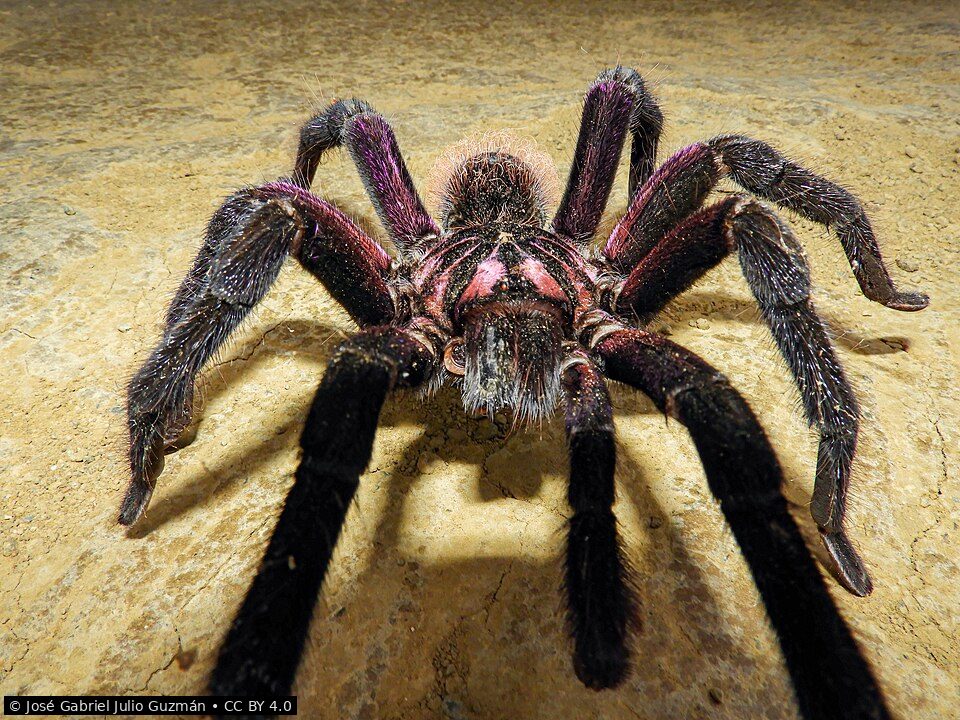
Image: Wikimedia Commons
Experience
Intermediate–Advanced
Lifespan
15–20 years (females)
Adult Legspan
7–8 in DLS
Origin
Northern South America
Xenesthis immanis — Ausserer, 1875
Image: Wikimedia Commons
Xenesthis immanis — the Colombian Lesserblack — is a large terrestrial species from the warm, humid lowland forests of northern South America, including Colombia, Venezuela, Ecuador, and Panama. It shelters in burrows and under cover on the forest floor, where deep soil stays damp and warm year-round.
It is a prized display tarantula, valued for its size and colour: a dark, velvety body with a striking pale "starburst" pattern on the carapace and a deep pink-to-purple iridescence across the legs and abdomen that flares under good lighting. That beauty, plus its demand for stable warmth and humidity, places it with intermediate-to-advanced keepers.
Juveniles are shy and reclusive, spending much of their time hidden, while adults grow bolder and more often sit out on display. It is a hardy spider once its humidity needs are met, but its size and energy reward keepers with some experience under their belt.
The Colombian Lesserblack is a large terrestrial species. Prioritise floor space and a good depth of moisture-retaining substrate, and keep the enclosure low to protect this heavy spider from falls.
| Life Stage | Enclosure | Notes |
|---|---|---|
| Spiderling (under 1.5") | Vented container with deep substrate | Damp substrate, burrow depth, small water source |
| Juvenile (2–4") | 1–3 gal with deep substrate | Moist substrate, cork hide, water dish |
| Sub-adult / Adult (5"+) | 18×18×12 in (or larger), low | 6 in of moist substrate, large cork hide, big water dish |
Provide around 6 inches of moisture-retaining substrate — coconut fibre and topsoil with some sphagnum — plus a large cork hide and a sturdy water dish. Maintain ventilation alongside the humidity so the enclosure stays fresh.
Warm and humid reflects the lowland forest floor. Aim for high humidity through damp substrate rather than a sealed, stagnant box.
| Parameter | Target | Notes |
|---|---|---|
| Temperature | 75–80°F (24–27°C) | Close to room temperature; avoid sustained drops below 70°F |
| Ambient Humidity | 75–85% RH | High — maintained mainly through damp substrate |
| Substrate | Damp, not waterlogged | Keep the lower layers moist; overflow the water dish as needed |
| Water | Large water dish | Always full; aids both drinking and humidity |
This is a strong, enthusiastic feeder that grows into a substantial spider. It takes large prey readily and rarely refuses food outside of pre-moult.
Prey: Large gut-loaded crickets, Dubia roaches, and locusts. Keep prey no larger than the spider's abdomen.
Frequency: Juveniles every 5–7 days, adults every 7–10 days. Aim for a plump but not over-stretched abdomen.
Remove uneaten prey within 24 hours, especially during pre-moult when the spider is vulnerable.
Stable humidity is important for a clean moult in this species. Each moult renews the pale carapace star and the purple iridescence at their most vivid.
Pre-moult signs: A darkened abdomen, food refusal, lethargy, and retreat into the hide or burrow. Remove all live prey at the first signs and keep the substrate damp.
Post-moult: Leave the spider undisturbed and wait 1–2 weeks before feeding so the new exoskeleton and fangs harden fully. Keep humidity steady throughout.
Handling is not recommended for the Colombian Lesserblack. It is large, powerful, and can be skittish or defensive, and a fall would seriously injure a spider of this weight. It is best appreciated as a display animal.
Urticating hairs are present and may be kicked off the abdomen when the spider feels threatened — they can cause notable skin and eye irritation. Interact with the enclosure rather than the spider, use long tools for maintenance, and keep any rehousing low and contained.
Print-friendly version of this guide — formatted for keepers on the go.
Download PDF