🕷️ Tarantulas
Chilean Rose Tarantula Care Guide
Grammostola rosea — Walckenaer, 1837
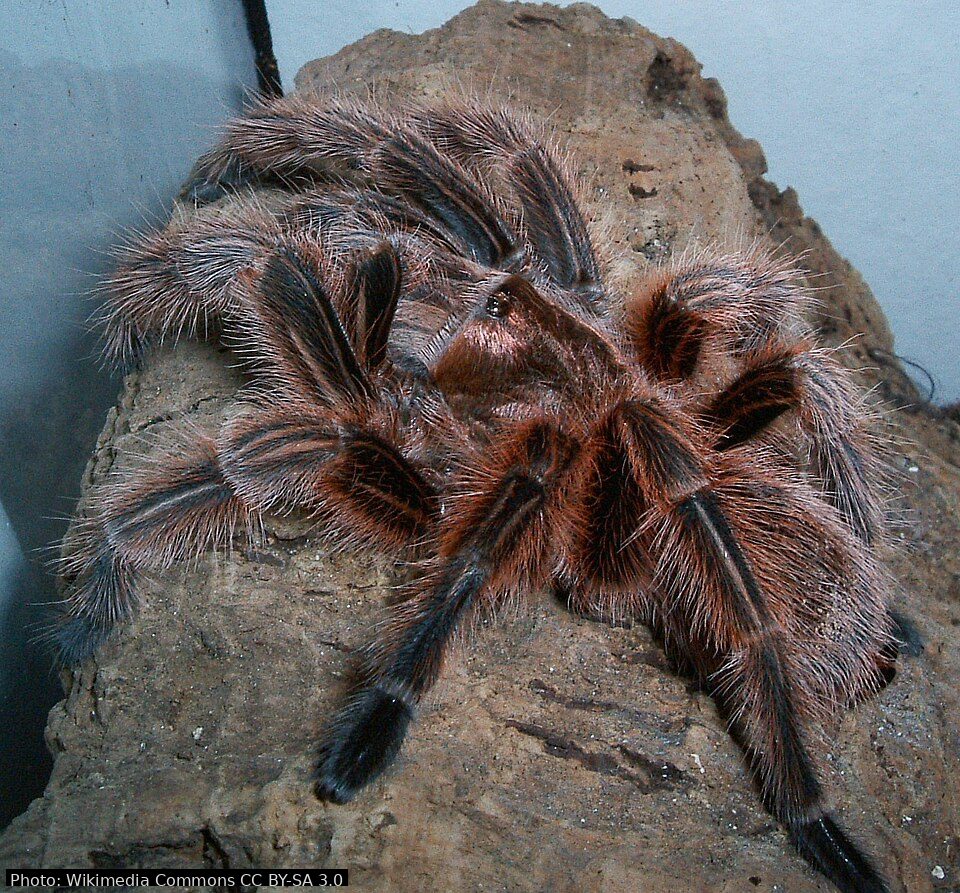
Image: Wikimedia Commons
Experience
Beginner
Lifespan
Up to 20+ years (females)
Adult Legspan
4.5–6 in DLS
Origin
Chile
Grammostola rosea — Walckenaer, 1837
Image: Wikimedia Commons
Grammostola rosea — the Chilean Rose, often called the Rose Hair or simply "Rosie" — comes from the arid scrub and desert margins of northern Chile, including the edges of the Atacama. It is a ground-dwelling species that shelters under rocks and in shallow scrapes through long, dry, sun-baked seasons.
That harsh, low-rainfall origin is the key to its care: this is a dry-climate tarantula that has evolved to weather long stretches with little food or water. In captivity that translates into remarkable hardiness and a famous — sometimes frustrating — willingness to fast for weeks or even months at a time.
The carapace and legs carry a subtle rose or pinkish sheen that gives the species its name, most visible just after a moult. Calm, slow-moving, long-lived, and extremely tolerant of beginner error, the Chilean Rose has been a classic first tarantula for decades.
The Chilean Rose is terrestrial and only a light burrower. It needs floor space far more than height, and it spends much of its time sitting out in the open rather than digging.
| Life Stage | Enclosure | Notes |
|---|---|---|
| Spiderling (under 1") | Deli cup / small vented container | Mostly dry substrate, small water source |
| Juvenile (1–3") | 16 oz – 1 gal enclosure | Cork bark hide, shallow water dish, dry substrate |
| Sub-adult / Adult (3"+) | 5–10 gal or equivalent | 3–4 in of substrate, cork hide, water dish, good airflow |
Provide 3–4 inches of mostly dry substrate — coconut fibre, peat, or topsoil — a cork bark hide, and a permanent water dish. Décor can be minimal; this species is not a heavy webber and prefers an open, simple layout.
Warm and dry mirrors the Chilean scrub. This species is exceptionally tolerant of normal household conditions.
| Parameter | Target | Notes |
|---|---|---|
| Temperature | 70–80°F (21–27°C) | Room temperature is ideal; avoid sustained drops below 65°F |
| Ambient Humidity | 40–55% RH | Dry — this is a desert-margin species |
| Substrate | Dry | Keep it dry; the water dish supplies all the moisture needed |
| Water | Permanent water dish | Keep filled at all times; this is the spider's main water source |
The Chilean Rose is an opportunistic feeder with a slow metabolism. It eats well when it wants to — and then sometimes refuses food for weeks or months for no obvious reason. This is normal and not a cause for alarm in an otherwise healthy, plump spider.
Prey: Gut-loaded crickets, Dubia roaches, and the occasional mealworm. Keep prey no larger than the spider's abdomen.
Frequency: Juveniles every 5–7 days, adults every 7–14 days when feeding. During a fast, simply keep the water dish full and offer food occasionally; a healthy adult can safely go a long time without eating.
Remove uneaten prey within 24 hours, especially during a fast or pre-moult.
This is a slow-growing species, and adults may moult only once a year or less. A fresh moult brings out the rose tint of the carapace at its strongest. Long fasts often precede a moult.
Pre-moult signs: A darkened abdomen, prolonged food refusal, lethargy, and sometimes a web mat over the substrate. Remove all live prey at the first signs.
Post-moult: Leave the spider undisturbed and wait 7–14 days before feeding so the new exoskeleton and fangs harden fully. Keep the water dish topped up throughout.
The Chilean Rose is generally placid and is one of the species most often handled by hobbyists. That said, individuals can be moody — most are calm, but some will adopt a defensive posture or flick hairs when disturbed. Handling is always done at the keeper's own risk and never entirely without it.
Urticating hairs are present (Type III) and may be kicked off the abdomen when the spider feels threatened — they can irritate skin and are especially uncomfortable near the eyes. Keep sessions calm and brief, stay low over a soft surface, and never handle over a hard floor, as a fall can rupture the abdomen and be fatal.
Print-friendly version of this guide — formatted for keepers on the go.
Download PDF