🕷️ Tarantulas
Chaco Golden Knee Tarantula Care Guide
Grammostola pulchripes — Simon, 1891
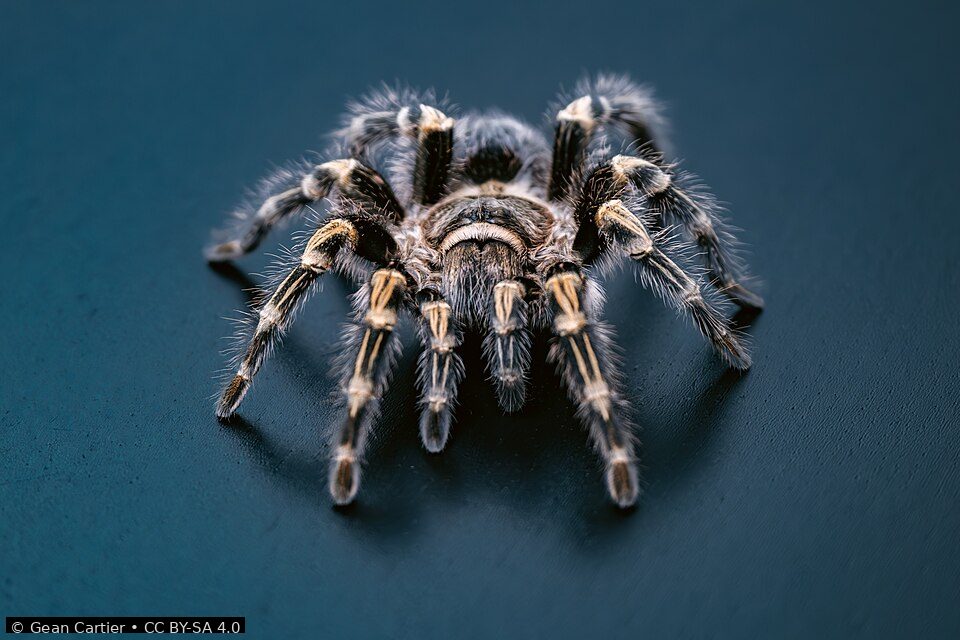
Image: Wikimedia Commons
Experience
Beginner
Lifespan
20–25 years (females)
Adult Legspan
7–8 in DLS
Origin
Argentina & Paraguay
Grammostola pulchripes — Simon, 1891
Image: Wikimedia Commons
Grammostola pulchripes — the Chaco Golden Knee — comes from the Gran Chaco, a vast, semi-arid lowland of grassland and dry scrub forest spanning northern Argentina and Paraguay. It is a ground-dwelling species that shelters in burrows and under debris through the heat of the day.
The Chaco climate is warm with a pronounced dry season, so while the species enjoys a touch more moisture than true desert tarantulas, it is adapted to tolerate dry spells and does not want a damp enclosure. Deep, diggable soil is its natural medium.
It is one of the largest beginner-friendly tarantulas, reaching a full 7–8 inches across, with a dark body offset by warm golden-yellow striping on the leg joints — the "golden knees" of the common name. Combined with a famously placid temperament and great hardiness, this size and colour make it one of the most rewarding first large tarantulas a keeper can own.
The Chaco is a large terrestrial burrower. Give it generous floor space and a good depth of substrate to dig in — height is unimportant and tall enclosures simply create fall risk for a heavy-bodied spider.
| Life Stage | Enclosure | Notes |
|---|---|---|
| Spiderling (under 1") | Deli cup / small vented container | Lightly moist substrate, deep enough to burrow |
| Juvenile (1–3") | 1–2.5 gal enclosure | Deep substrate, cork hide, shallow water dish |
| Sub-adult / Adult (3"+) | 10–20 gal or equivalent | 4–6 in of substrate, cork hide, water dish, good airflow |
Provide 4–6 inches of substrate — coconut fibre, peat moss, or a topsoil blend — so the adult can excavate. Add a cork bark hide and a sturdy water dish. Good ventilation keeps the enclosure from going stale and mouldy.
Warm room temperatures and modest humidity reflect the Chaco grassland. This is a forgiving species that tolerates a wide comfort band.
| Parameter | Target | Notes |
|---|---|---|
| Temperature | 70–80°F (21–27°C) | Room temperature is ideal; avoid sustained drops below 65°F |
| Ambient Humidity | 60–70% RH | Moderate — mainly dry with a lightly dampened corner |
| Substrate | Mostly dry | Dampen one corner or overflow the water dish occasionally |
| Water | Permanent water dish | Keep filled at all times |
The Chaco is a confident, reliable eater that rarely fasts for long outside of pre-moult. Its large adult size means it can take sizeable prey.
Prey: Gut-loaded crickets, Dubia roaches, and the occasional mealworm or superworm. Keep prey no larger than the spider's abdomen.
Frequency: Juveniles every 5–7 days, adults every 7–10 days. Adults can be fed less often if their abdomen is full — this species grows slowly and stores reserves well.
Remove uneaten prey within 24 hours, particularly during pre-moult when the spider is vulnerable.
Growth is slow in this species, so adults may moult only once a year or less. Each moult refreshes the contrast between the dark body and the golden leg striping.
Pre-moult signs: A darkened abdomen, loss of appetite, lethargy, and sometimes a web mat over the substrate. Remove all live prey at the first signs.
Post-moult: Leave the spider undisturbed and wait 7–14 days before feeding so the new exoskeleton and fangs harden fully. Keep the water dish topped up throughout.
The Chaco Golden Knee is renowned as one of the calmest large tarantulas, and many keepers find it tolerant of slow, gentle handling. Even so, it is a heavy spider, and handling is always done at the keeper's own risk and never entirely without it.
Urticating hairs are present (Type III) and may be kicked off the abdomen when the spider feels threatened — they can irritate skin and are especially uncomfortable near the eyes. Keep sessions calm and brief, stay low over a soft surface, and never handle over a hard floor, as a fall can rupture the abdomen and be fatal.
Print-friendly version of this guide — formatted for keepers on the go.
Download PDF