🐍 Snakes
Brazilian Rainbow Boa Care Guide
Epicrates cenchria
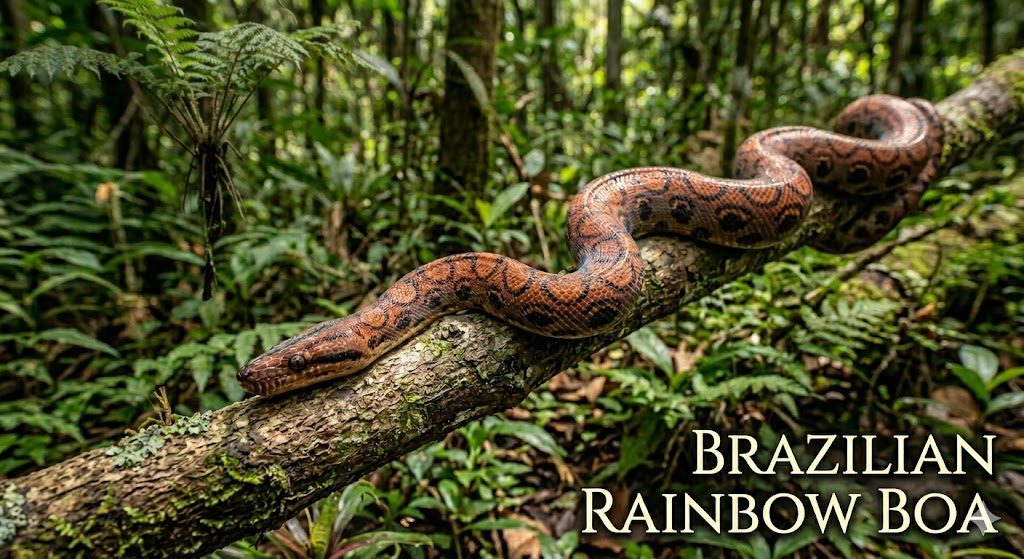
Image: Wikimedia Commons
Experience
Intermediate
Lifespan
Species-dependent
Adult Size
5–6 ft
Origin
Amazonian South America — Brazil, the Guianas, Bol
Epicrates cenchria
Image: Wikimedia Commons
Origin Amazonian South America — Brazil, the Guianas, Bolivia, Peru, Colombia, Ecuador, and Venezuela Adult size 5–6 ft on average; some individuals grow larger Lifespan 20+ years in captivity Experience level Intermediate — manageable size and temperament, but humidity needs are exacting
Generally docile and slow-moving; young animals can be more nervous and quick to musk Venom Non-venomous; kills prey by constriction
The Brazilian rainbow boa is native to the Amazon basin, ranging across Brazil and into the Guianas, Bolivia, Peru, Colombia, Ecuador, and Venezuela. It lives in humid lowland rainforest and the moist forest margins that surround it, an environment defined by warm, stable temperatures and consistently saturated air. That single fact — that this snake evolved in one of the wettest habitats on Earth — drives almost every husbandry decision a keeper makes for it in captivity. It is a semi-arboreal, largely nocturnal species, spending daylight hours tucked into burrows, leaf litter, or dense ground cover, then becoming active after dark to hunt small mammals, birds, and lizards along the forest floor and low vegetation. The iridescent sheen that gives the species its name comes from microscopic ridges on the scales that refract light into shifting rainbow highlights across an otherwise reddish-brown body — a structural effect rather than pigment, and most visible in direct light. Because this species is so closely tied to a humid, thermally stable environment, captive rainbow boas are considerably less forgiving of dry air or temperature swings than many other popular pet snakes. Dehydration and overheating are the two leading causes of preventable death in captive rainbow boas, which makes a well-built, humidity-retentive enclosure the single most important investment a keeper makes before bringing one home.
Use a glass or Pvc enclosure that holds humidity well and seals securely — open-mesh enclosures designed for arid species are a poor fit here. A single adult can be kept in an enclosure no smaller than 36 inches long by 18 inches wide by 18 inches tall, though a more spacious setup around 6 feet long by 3 feet wide by 3 feet tall is preferable and gives the snake more room to thermoregulate and make use of both ground space and low branches. Hatchlings and juveniles should start in a smaller, easier-to-manage enclosure and graduate up as they grow.
Choose a substrate that holds moisture without breaking down or growing mold — cypress mulch and coconut coir are the standard choices and both perform well under the frequent misting this species requires. Avoid substrates that turn soggy or compact when wet, since a damp but well-ventilated enclosure is the goal, not a swamp.
Provide secure hides on both the warm and cool ends so the snake can retreat and thermoregulate without sacrificing security. Because this species is semi-arboreal, include sturdy, well anchored branches for climbing — anything offered should be fixed firmly to the enclosure walls or floor, since a heavy adult boa can dislodge unsecured decor and injure itself.
Maintain a basking surface of 84–88°F on the warm end, and never allow sustained temperatures above 90°F — this species is notably heat-sensitive and prolonged heat in that range can be dangerous outside of a gravid female's elevated needs. The cool end should sit in the mid-to-upper 70s°F, with a gentle night-time drop into the low-to-mid 70s°F being normal and beneficial rather than something to correct.
75–90% for adults through daily misting and a humidity-retentive substrate, and keep neonates and young juveniles even more consistently humid, as they are more vulnerable to dehydration than adults. A large water dish the snake can soak in, refreshed regularly, helps maintain both hydration and ambient moisture.
Hatchlings do well on a pinky or fuzzy every 5–7 days. Juveniles are typically fed roughly weekly to every 10 days, and adults every 2–4 weeks depending on body condition, with prey weight amounting to roughly 10% of the snake's body weight as a general guide. As with any boa, body condition should guide frequency more than a fixed calendar. Refusal & Fasting Notes Occasional missed meals are normal, particularly around shedding or cooler periods, and are not a concern in an otherwise healthy snake. If a rainbow boa refuses more than a couple of consecutive feedings — especially outside of a shed cycle — check humidity and temperature first, since husbandry gaps are the most common underlying cause, and consult an experienced reptile veterinarian if refusal continues.
Provide a water dish large enough for the snake to fully submerge in, since soaking supports both hydration and humidity. Change the water frequently, as this species will use the dish often and water can foul quickly. A consistently available, clean
Adult Brazilian rainbow boas are generally calm, slow-moving snakes that tolerate handling well once settled into their
Signs A boa preparing to shed takes on a duller, hazier appearance and its eyes cloud over as the new skin separates beneath the old layer. Appetite commonly drops during this period, which is normal and temporary. During the Process High ambient humidity is especially important through a shed cycle, since this species is prone to incomplete sheds in air that's too dry. Rough surfaces such as branches or rock decor give the snake something to catch the old skin on as it works its way free, and a healthy shed should come away in a single piece. Post-Molt / Post-Shed Care Inspect the shed skin for completeness, paying close attention to the tail tip and eye caps. If any skin remains stuck, a 15–20 minute soak in lukewarm water will usually loosen it enough to come free gently; persistent retained shed, especially around the eyes, should be checked by a reptile veterinarian.
Dehydration and overheating are the two leading causes of preventable illness and death in captive rainbow boas, both traceable directly to enclosure humidity and temperature falling outside this species' relatively narrow comfort zone. Signs of dehydration include retained shed, lethargy, and sunken or wrinkled skin, while overheating can show up as restlessness or obvious heat-avoidance behavior. Respiratory infections can develop in enclosures that are humid but poorly ventilated, presenting as wheezing or labored breathing. Quarantine any new animal before introducing it to an existing collection to reduce the risk of mites or other parasites. Any combination of poor appetite, lethargy, and abnormal breathing warrants an evaluation by an experienced reptile veterinarian.
Brazilian rainbow boas are ovoviviparous, giving live birth to fully formed young rather than laying eggs. Breeding in captivity typically follows a period of slightly cooler temperatures and a corresponding reduction in feeding to help cue reproductive condition, followed by a return to normal warmth and humidity before introducing a proven pair. Females require good body condition and maturity before breeding is considered. All breeding should be carried out using captive-bred stock only. Sources This guide was compiled using commonly accepted husbandry practices from experienced keepers and industry-standard reptile care resources.
Print-friendly version of this guide — formatted for keepers on the go.
Download PDF