🕷️ Tarantulas
Blue Earth Tiger Tarantula Care Guide
Chilobrachys dyscolus — Simon, 1886
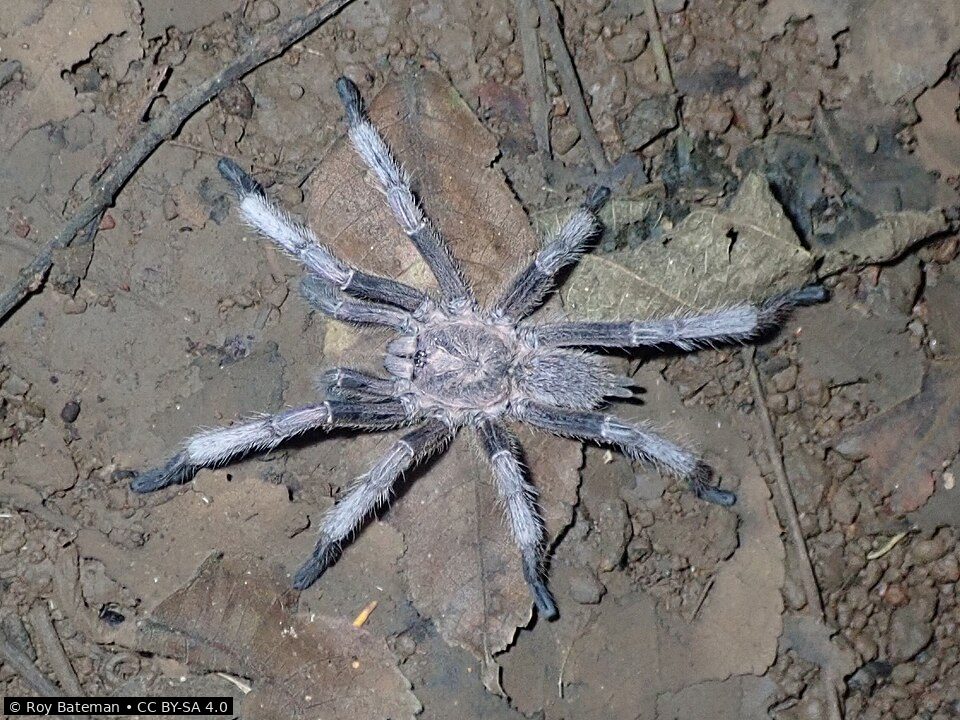
Image: Wikimedia Commons
Experience
Advanced
Lifespan
Up to 12 years (females)
Adult Legspan
5–6 in DLS
Origin
Southeast Asia
Chilobrachys dyscolus — Simon, 1886
Image: Wikimedia Commons
Chilobrachys dyscolus — the Blue Earth Tiger — is a fossorial Old World species from the forests of Southeast Asia, including Vietnam and southern China. It lives underground in deep burrow systems, lining its tunnels and the entrance with heavy silk and emerging to ambush passing prey.
Its care centres on depth and humidity: a tall column of moisture-retaining substrate for burrowing, kept warm and humid but ventilated. Adults are highly secretive and spend most of their lives below ground, so this is a species kept for the spectacle of its webbing and the occasional dramatic glimpse rather than constant visibility.
Freshly moulted adults and subadults show a stunning dark metallic-blue sheen across the body. It is also a classic Old World earth tiger — fast, alert, and quick to throw a threat posture — with no urticating hairs and potent venom, making it a species for experienced keepers only.
The Blue Earth Tiger is an obligate burrower. Substrate depth is everything — give it a deep column of packed substrate to excavate, and prioritise a secure, escape-proof enclosure, as this species is fast and will exploit any gap.
| Life Stage | Enclosure | Notes |
|---|---|---|
| Spiderling (under 1") | Vial / vented container with deep substrate | Damp substrate, burrow depth, small water source |
| Juvenile (1–3") | Deep 16 oz – 1 gal container | Packed moist substrate, starter burrow, water dish |
| Sub-adult / Adult (3"+) | 5–10 gal with deep substrate | 6–8 in of packed substrate, water dish, good airflow |
Provide 6–8 inches of packed, moisture-retaining substrate — coconut fibre and topsoil — so the spider can construct a proper burrow. A water dish should always be present even though the spider rarely emerges to use it. Expect heavy webbing and silk "curtains" at the burrow mouth.
Warm and humid reflects the Southeast Asian forest floor. Maintain moisture by watering one side of the enclosure rather than misting, and keep air moving to prevent stagnation.
| Parameter | Target | Notes |
|---|---|---|
| Temperature | 75–82°F (24–28°C) | Stable warmth; avoid sustained drops below 70°F |
| Ambient Humidity | 70–80% RH | High — maintained through damp substrate, not heavy misting |
| Substrate | Damp, packed | Pour water down one side to keep the lower layers moist |
| Water | Water dish | Always present, even though the spider rarely emerges to drink |
The Blue Earth Tiger is a fast, aggressive ambush feeder that snatches prey from its burrow entrance. It is a reliable eater but may ignore food while sealed in for a moult or simply staying underground.
Prey: Gut-loaded crickets, Dubia roaches, and other feeder insects. Keep prey no larger than the spider's abdomen.
Frequency: Juveniles every 5–7 days, adults every 7–10 days. Drop prey near the burrow entrance and check later rather than waiting at the enclosure.
Remove uneaten prey within 24 hours, especially if the spider is in pre-moult underground.
The Blue Earth Tiger moults underground and usually seals its burrow beforehand. A fresh moult brings out the dark metallic-blue sheen at its most vivid. Growth is fast when the spider is kept warm and well-fed.
Pre-moult signs: A darkened abdomen, food refusal, and a sealed burrow entrance. Remove all live prey at the first signs and keep the substrate damp.
Post-moult: Leave the spider completely undisturbed and wait 1–2 weeks before feeding so the new exoskeleton and fangs harden fully. Keep humidity steady throughout.
Handling is strongly discouraged for the Blue Earth Tiger. As an Old World species it has no urticating hairs — its defences are speed and a bite carrying potent venom that can cause significant local pain, swelling, and cramping. Its underground, defensive nature offers no upside to handling.
Treat it as an observation-and-webbing display species. Use long tools for all maintenance, keep a catch cup ready, and only ever expose the spider during essential rehousing in a sealed work area. Seek medical attention for any bite that produces severe or spreading symptoms.
Print-friendly version of this guide — formatted for keepers on the go.
Download PDF