🕷️ Tarantulas
Arizona Blonde Tarantula Care Guide
Aphonopelma chalcodes — Chamberlin, 1940
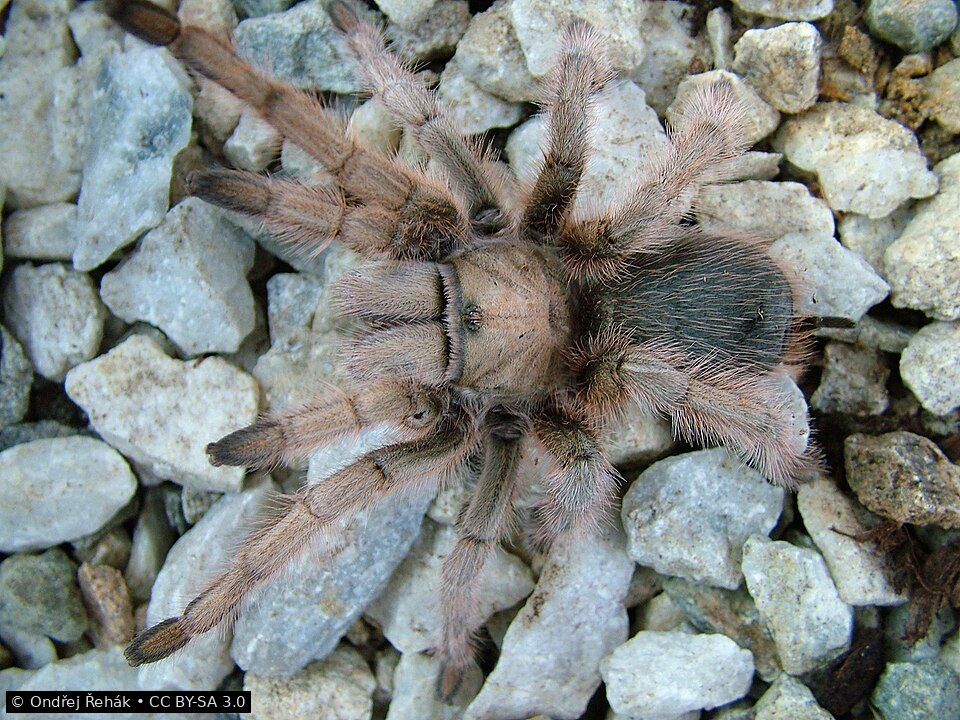
Image: Wikimedia Commons
Experience
Beginner
Lifespan
20–30 years (females)
Adult Legspan
5–6 in DLS
Origin
Sonoran Desert, USA & Mexico
Aphonopelma chalcodes — Chamberlin, 1940
Image: Wikimedia Commons
Aphonopelma chalcodes — the Arizona Blonde, also called the Desert Blonde — is native to the Sonoran Desert of the south-western United States and northern Mexico. It spends the dry, scorching days sealed inside deep burrows and emerges at dusk to hunt, avoiding the worst of the desert heat.
Everything about its care follows from that desert origin: it is built for dry conditions, a slow metabolism, and long periods of inactivity. Mature males are famous for wandering across desert roads in late summer in search of females, but in captivity this is an unhurried, sedentary spider.
Adults are a soft tan to blonde, with paler hairs on the legs that give the species its name. It is one of the longest-lived tarantulas in the hobby — females can pass 25 years — and its calm temperament and undemanding care make it an excellent, if slow-growing, beginner species.
The Arizona Blonde is a terrestrial desert burrower. Give it floor space and a solid depth of dry substrate to dig into; height should be kept low, as this heavy-bodied spider is harmed by falls.
| Life Stage | Enclosure | Notes |
|---|---|---|
| Spiderling (under 1") | Deli cup / small vented container | Mostly dry substrate, deep enough to burrow, small water source |
| Juvenile (1–3") | 16 oz – 1 gal enclosure | Deep dry substrate, cork hide, shallow water dish |
| Sub-adult / Adult (3"+) | 5–10 gal or equivalent | 4–5 in of dry substrate, cork hide, water dish, good airflow |
Provide 4–5 inches of dry substrate — coconut fibre, peat, or a topsoil mix — so the spider can dig. Add a cork bark hide as a starter retreat and a permanent water dish. A horizontal, low enclosure suits it far better than a tall one.
Warm and dry reflects the Sonoran Desert. This species tolerates the upper end of the temperature range comfortably.
| Parameter | Target | Notes |
|---|---|---|
| Temperature | 70–85°F (21–29°C) | Tolerates desert warmth well; avoid sustained drops below 65°F |
| Ambient Humidity | 30–40% RH | Low — this is a true desert species |
| Substrate | Dry | Keep it dry; the water dish supplies all the moisture needed |
| Water | Permanent water dish | Keep filled at all times |
The Arizona Blonde has a notably slow metabolism and a modest appetite. It eats steadily but unhurriedly, and like other desert species it can fast for extended periods, particularly in cooler months — this is normal in a healthy spider.
Prey: Gut-loaded crickets, Dubia roaches, and the occasional mealworm. Keep prey no larger than the spider's abdomen.
Frequency: Juveniles every 7–10 days, adults every 10–14 days when feeding. Do not be alarmed by seasonal fasts; keep the water dish full and offer food occasionally.
Remove uneaten prey within 24 hours, especially during a fast or pre-moult.
This is among the slowest-growing tarantulas in the hobby, and adults may moult only once a year or less. A fresh moult restores the soft blonde colouration at its cleanest.
Pre-moult signs: A darkened abdomen, prolonged food refusal, lethargy, and sometimes sealing of the burrow. Remove all live prey at the first signs.
Post-moult: Leave the spider undisturbed and wait 7–14 days before feeding so the new exoskeleton and fangs harden fully. Keep the water dish topped up throughout.
The Arizona Blonde is calm and slow-moving, and is one of the more handleable species when it is out of its burrow. Its unhurried nature makes sudden bolts unlikely, but handling is always done at the keeper's own risk and never entirely without it.
Urticating hairs are present (Type III) and may be kicked off the abdomen when the spider feels threatened — they can irritate skin and are especially uncomfortable near the eyes. Keep sessions calm and brief, stay low over a soft surface, and never handle over a hard floor, as a fall can rupture the abdomen and be fatal.
Print-friendly version of this guide — formatted for keepers on the go.
Download PDF